
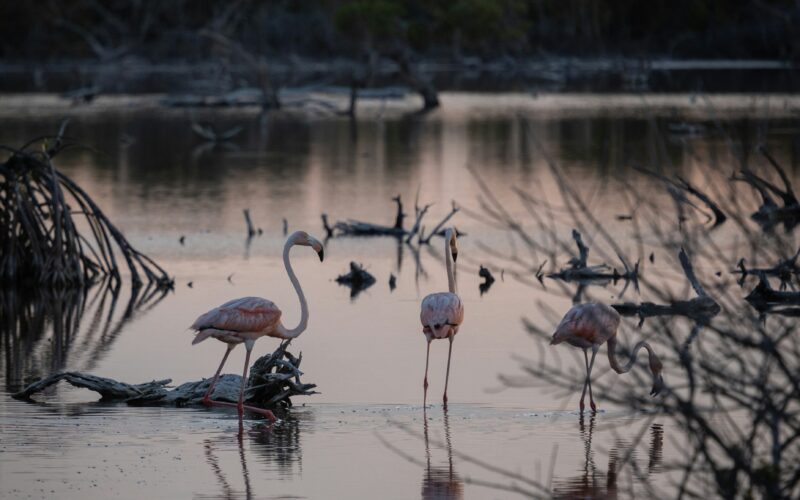
Environmental activists, residents, and conservation groups gathered in Navi Mumbai this week to hold a silent march demanding urgent protection for the city’s flamingo wetlands, drawing attention to what campaigners describe as a deepening ecological crisis affecting migratory bird habitats. The protest, organised to coincide with World Migratory Bird Day, focused on the deteriorating condition of wetlands around NRI Lake and DPS Flamingo Lake in the Seawoods and Nerul areas. Reports from The Times of India, The Free Press Journal, and Devdiscourse all highlighted concerns about shrinking wetland protection, pollution, and unchecked urban development in the region.
The silent march was held under the campaign slogan “#SaveFlamingoLakes” and brought together environmental organisations including the NatConnect Foundation, the Navi Mumbai Environment Preservation Society (NMEPS), and the Save Flamingos and Mangroves Forum. Participants walked peacefully between NRI Lake and DPS Flamingo Lake carrying banners and placards warning about the destruction of wetlands and the dangers facing migratory birds. Messages displayed during the event included calls to save flamingo habitats and protect wetlands that also serve as natural flood buffers for the city.
According to reporting by The Times of India, activists said recent laboratory tests of water samples from the wetlands showed alarming ecological stress. Thick algal growth, stagnant water, and declining water quality have reportedly created increasingly hostile conditions for flamingos and other migratory species that traditionally stop in Navi Mumbai during migration seasons. Environmental groups warned that delayed flamingo arrivals this year may be a visible sign of worsening habitat degradation linked to climate change and human interference.
The Free Press Journal reported that many residents have become increasingly concerned after noticing fewer flamingos arriving at the wetlands compared with previous years. Activists said flamingos had appeared late at NRI Lake while birds were still absent from the TS Chanakya and DPS wetlands. Conservation campaigners argued that blocked tidal flows and stagnant water are damaging the food chain and making the wetlands unsuitable for migratory birds.
Speaking during the protest, environmental campaigners criticised authorities for failing to grant official wetland protection status to the affected lakes despite previous court directions. Activists claimed the lack of formal recognition has weakened conservation efforts and allowed environmentally sensitive areas to remain vulnerable to development pressures. The issue has already reached legal forums including the Bombay High Court and the National Green Tribunal.
Devdiscourse, carrying a report from Press Trust of India (PTI), noted that campaigners accused the City and Industrial Development Corporation (CIDCO), the region’s planning authority, of continuing to convert ecologically important spaces into urban construction zones. Protest organisers argued that city planning in Navi Mumbai has prioritised infrastructure and commercial expansion over environmental sustainability. Activists warned that replacing wetlands with concrete development could permanently damage biodiversity and increase the city’s vulnerability to flooding.
The conflict over the wetlands has intensified in recent months. The Times of India recently reported that CIDCO valued part of the DPS Flamingo Lake area at approximately ₹3,600 crore and opposed efforts to designate the site as a conservation reserve. Environmentalists strongly objected to the move, saying it treated an ecologically sensitive habitat as commercially developable land rather than protected natural space. Conservation groups have argued that the wetlands support not only flamingos but also mangroves, mudflats, and broader ecosystems vital to the region’s environmental balance.
In response to mounting criticism, Maharashtra’s Forest Department has reportedly proposed expanding the protected conservation area around DPS Flamingo Lake from 12 hectares to more than 36 hectares. The revised proposal includes water bodies, mangroves, creek areas, mudflats, and surrounding ecological zones. Environmental groups welcomed the proposal but urged authorities to speed up official approval processes before further environmental damage occurs.
The wetlands of Navi Mumbai have become internationally recognised for hosting large numbers of migratory flamingos and other bird species. Environmentalists say the habitats are part of a broader ecological network connected to the Thane Creek Flamingo Sanctuary, one of India’s most important urban wetland ecosystems. Campaigners argue that protecting these wetlands is critical not only for biodiversity but also for climate resilience and sustainable urban planning.
This year’s World Migratory Bird Day theme, “Creating Bird-Friendly Cities and Communities,” became a central message of the march. Organisers said the protest was intended to remind authorities and citizens that wetlands are not wastelands but living ecosystems that help support wildlife, regulate water systems, and protect urban areas from environmental risks. While the demonstration remained peaceful, activists made clear that they plan to continue legal action, awareness campaigns, and public protests until stronger conservation measures are introduced.