
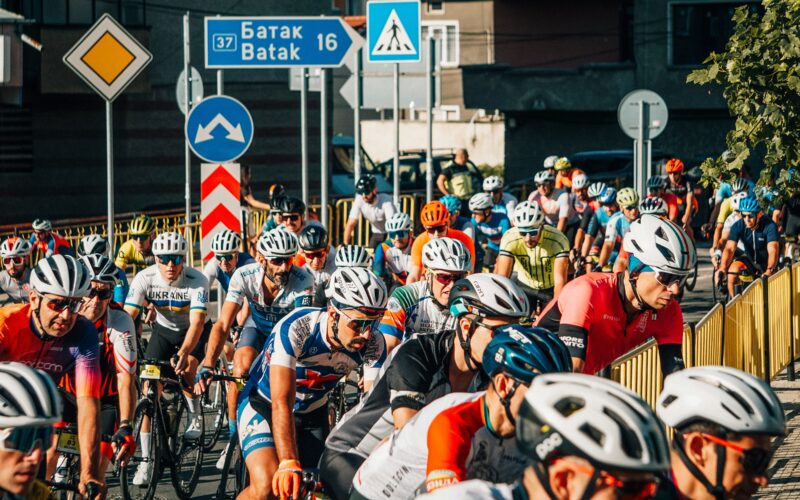
The 2026 Giro d’Italia officially got underway on May 8 with a historic opening stage in Bulgaria, marking the first time the famous cycling race has ever started in the Balkan country. The 109th edition of the Giro, one of cycling’s three Grand Tours alongside the Tour de France and Vuelta a España, began in the UNESCO-listed Black Sea town of Nessebar before finishing in Burgas after a fast and dramatic sprint stage. Reports from Reuters, The Guardian, Cycling Weekly, and Associated Press highlighted the significance of the race’s international start and the intense competition expected throughout the three-week event.
French rider Paul Magnier of Soudal Quick-Step claimed victory in the opening stage after avoiding a crash in the final metres and sprinting to the finish ahead of Denmark’s Tobias Lund Andresen and Britain’s Ethan Vernon. Reuters reported that the chaotic finish disrupted several favourites and left Magnier wearing the Giro’s famous pink leader’s jersey, known as the maglia rosa, for the first time in his career. The 21-year-old described the victory as one of the biggest moments of his professional career and a dream start to his Giro debut.
This year’s Giro represents another major international expansion for the Italian race. According to Associated Press and Giro d’Italia organisers, the 2026 edition is the 16th time the race has begun outside Italy and the second consecutive foreign start after Albania hosted the opening stages in 2025. Bulgaria secured the hosting rights as part of an effort to boost tourism, international exposure, and investment in cycling infrastructure. Organisers said the opening three stages through Bulgaria are intended to showcase the country’s Black Sea coastline, historic cities, and mountain landscapes to a global television audience.
The race route covers 3,459 kilometres across 21 stages and includes nearly 50,000 metres of climbing, making it one of the toughest editions in recent years. Cycling Weekly reported that the route contains seven summit finishes, multiple Alpine and Dolomite mountain stages, and a decisive 40-kilometre individual time trial along the Tuscan coast. The Giro will eventually travel through Italy and sections near Switzerland before concluding in Rome on May 31. Mountain stages later in the race are expected to play a decisive role in determining the overall champion.
One of the biggest storylines entering the race is the Giro debut of Danish cyclist Jonas Vingegaard. Reuters and The Guardian both reported that Vingegaard, already a two-time Tour de France winner and reigning Vuelta a España champion, is attempting to complete the rare achievement of winning all three Grand Tours during his career. If successful, he would become only the eighth rider in cycling history to accomplish the feat.
Vingegaard enters the Giro as the overall favourite after several high-profile rivals decided to skip the race to focus on later events in the season. The Guardian reported that reigning Tour de France stars Tadej Pogačar and Remco Evenepoel are not competing this year, leaving Vingegaard with what many analysts see as a favourable opportunity to win the pink jersey in Rome. The Danish rider said before the race that he welcomed the challenge of competing in a new Grand Tour after several years following a similar racing schedule.
British cyclist Adam Yates is also viewed as a serious contender. In an interview reported by The Times, Yates reflected on returning to the Giro nearly a decade after a difficult experience on the famous Blockhaus climb in 2017. Now riding as team leader for UAE Team Emirates-XRG, Yates said he hopes his improved climbing form and experience can help him challenge for the overall classification. He also credited advice from his twin brother Simon Yates, winner of the 2025 Giro d’Italia, as motivation heading into this year’s race.
The Bulgarian start has not been without controversy and logistical complications. CyclingNews reported that teams face a difficult 1,000-kilometre transfer from Bulgaria to southern Italy after the opening stages, creating one of the largest logistical operations in modern Giro history. Around 2,000 staff members, vehicles, bicycles, and support systems must be transported between countries during what is officially classified as a rest day. Some teams criticised organisers over additional travel costs and reduced recovery time for riders.
Despite those concerns, organisers and Bulgarian officials have promoted the event as a major moment for cycling development in Eastern Europe. Giro organisers said the race’s presence in Bulgaria demonstrates the expanding global appeal of professional cycling and offers younger fans in the region the chance to experience elite competition firsthand. Streets in Nessebar, Burgas, and other host cities were lined with spectators waving flags and wearing pink colours associated with the race.
The Giro d’Italia remains one of the most prestigious and demanding events in world sport. Alongside fierce mountain climbs and sprint finishes, riders must manage fatigue, weather conditions, crashes, and tactical battles over three exhausting weeks. This year’s edition is expected to attract millions of viewers worldwide, with cycling fans closely watching whether Vingegaard can complete his Grand Tour collection or whether another challenger can emerge during the brutal mountain stages still to come.