
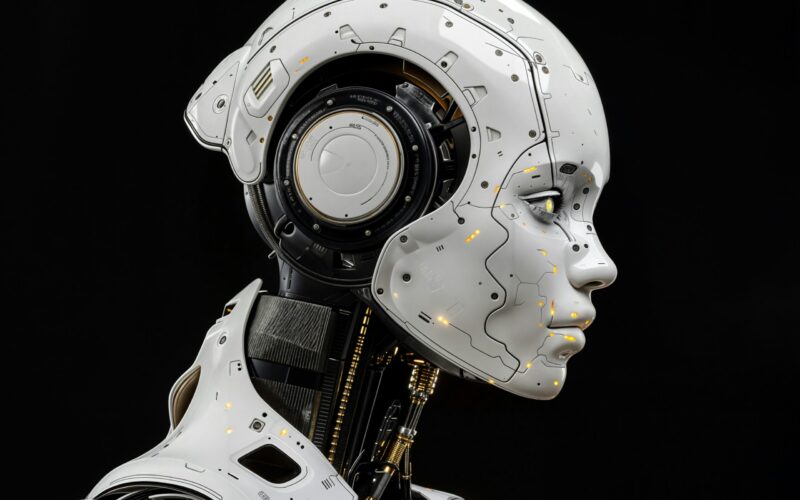
Artificial intelligence is rapidly moving beyond software and digital environments into machines that can see, move, and act in the real world, marking a major shift toward what researchers and companies increasingly describe as embodied or physical AI.
This transition is being driven by advances in robotics, machine learning, and sensor technology, enabling humanoid and industrial robots to perform tasks that previously required human labour. According to Reuters, companies across the technology and automotive sectors are accelerating efforts to commercialise humanoid robots capable of operating in factories, warehouses, and controlled public environments, signalling that robotics is becoming a central frontier in the global AI race.
One of the most visible examples of this shift is the growing collaboration between major industrial firms and robotics developers. According to Axios, Nvidia CEO Jensen Huang recently highlighted Hyundai’s robotics division, including its ownership of Boston Dynamics, as a leading force in the development of real-world AI systems. He pointed to Hyundai’s push to deploy advanced humanoid robots in manufacturing environments as evidence that robotics is moving from experimental prototypes toward large-scale industrial use.
Axios reported that Hyundai is preparing to integrate humanoid robots into automotive production facilities, where they are expected to work alongside humans in tasks such as assembly support, logistics, and material handling. These developments reflect a broader strategy in which robotics is not treated as a standalone industry but as part of a wider transformation in how AI interacts with the physical world.
According to TechRadar, the robotics sector in 2026 is still in a transitional phase, with many humanoid systems such as Tesla’s Optimus and Boston Dynamics’ Atlas showing impressive mobility and dexterity in demonstrations but still facing limitations in autonomy and reliability. The publication noted that while robots are increasingly capable of walking, balancing, and manipulating objects, their ability to perform complex, unscripted tasks in unpredictable environments remains limited.
Despite these constraints, companies continue to present ambitious roadmaps for deployment. According to Reuters, manufacturers like Hyundai and its robotics subsidiary Boston Dynamics are planning to move humanoid robots into real-world industrial settings as early as the mid-2020s. These early deployments are expected to focus on structured environments such as factories, where tasks are repetitive and conditions are controlled, reducing the risk associated with early-stage autonomy.
The growing interest in physical AI is also being driven by labour market pressures. According to TechRadar, industries such as logistics, warehousing, and manufacturing are increasingly exploring automation solutions to address labour shortages and rising operational costs. Humanoid robots are seen as particularly valuable because they can operate in environments designed for humans, potentially reducing the need for costly infrastructure changes.
At the same time, research in embodied AI is advancing quickly, enabling robots to better interpret and respond to their surroundings. According to academic research published in arXiv, modern embodied AI systems combine vision-language-action models with large-scale machine learning techniques, allowing robots to process visual input, understand instructions, and execute physical actions in real time. These systems are designed to improve adaptability and allow robots to generalise across tasks rather than being programmed for a single function.
However, researchers also warn that significant technical and ethical challenges remain. According to TechRadar, issues such as limited dexterity, battery constraints, safety risks, and unreliable decision-making still prevent humanoid robots from achieving widespread everyday use. Many systems currently rely on teleoperation, where human operators remotely guide robots during training or demonstrations, highlighting the gap between perceived capability and true autonomy.
Despite these limitations, investment in robotics continues to accelerate. According to Reuters, major technology firms, automotive manufacturers, and venture capital groups are increasingly viewing embodied AI as one of the largest potential growth markets of the next decade. Analysts suggest that physical AI could eventually reshape industries by automating not only digital tasks but also physical labour in ways that traditional software-based AI cannot.
Axios also reported that competition in this space is intensifying, with companies such as Tesla, Hyundai, and multiple robotics startups racing to develop humanoid systems capable of scaling into mass production. Tesla’s Optimus robot, for example, has been positioned as a long-term platform for general-purpose labour automation, while other firms are focusing on more specialised industrial applications.
According to TechRadar, one of the key trends shaping the field is the gradual move away from remote-controlled robotics toward more autonomous systems powered by advanced AI models. This includes efforts to train robots using real-world data rather than human-operated demonstrations, allowing machines to learn from experience and improve performance over time.
Researchers believe this shift could eventually lead to robots capable of operating with minimal human supervision in structured environments. However, most experts agree that widespread deployment of fully autonomous humanoid robots in homes or unpredictable public spaces remains years, if not decades, away.
For now, embodied AI is entering what many describe as a critical transition period, where experimental prototypes are beginning to be tested in real industrial settings. According to Reuters, this stage will determine whether humanoid robotics can move beyond demonstration technology into reliable commercial tools that deliver consistent value in real-world conditions.
As investment, research, and competition continue to intensify, the development of physical AI is increasingly seen as one of the defining technological shifts of the decade, potentially reshaping how humans interact with machines in both work and daily life.