
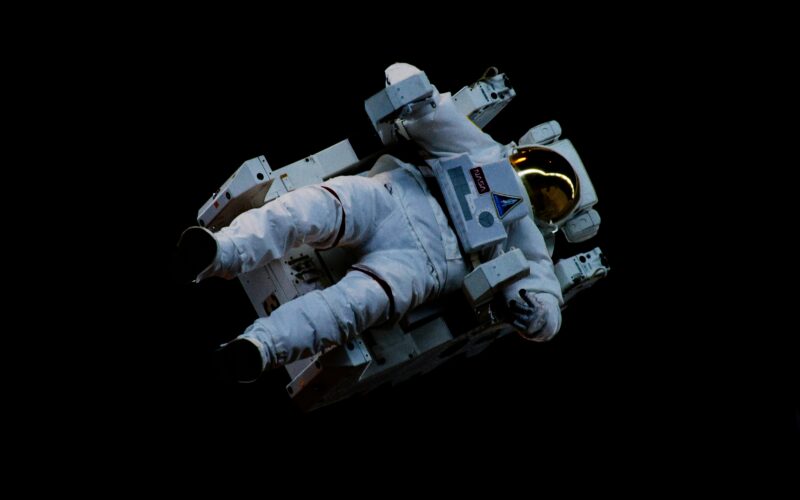
British astronaut John McFall is on course to make history after becoming eligible to become the first person with a physical disability to live and work in orbit, marking a significant milestone for both space exploration and disability inclusion. The former Paralympian, orthopaedic surgeon and member of the European Space Agency’s astronaut reserve could travel to the Haven-1 commercial space station as early as 2027 following a landmark agreement between the UK Government and American space company Vast.
According to the UK Government and the UK Space Agency, a memorandum of understanding signed with Vast will allow the company to explore sponsorship opportunities to support McFall’s mission to Haven-1, which is expected to become the world’s first commercial space station. If the mission proceeds as planned, McFall would become the first astronaut with a physical disability to live and conduct research in orbit, demonstrating that physical disabilities need not be a barrier to long-duration spaceflight.
McFall’s journey has been anything but ordinary. At the age of 19, he lost his right leg above the knee in a motorcycle accident. Rather than allowing the life-changing injury to define him, he rebuilt his life through sport, eventually becoming one of Britain’s leading Paralympic sprinters. He won bronze in the 100 metres at the 2008 Beijing Paralympic Games before pursuing a career in medicine, qualifying as an orthopaedic surgeon while continuing to push the boundaries of what people with disabilities can achieve.
According to The Guardian, McFall was selected for the European Space Agency’s astronaut reserve in 2022 as part of its groundbreaking Fly! initiative, a programme established to examine whether astronauts with physical disabilities could safely participate in long-duration space missions. Following years of medical assessments, engineering studies and operational testing, researchers concluded there were no technical or medical reasons preventing him from flying on a mission lasting up to six months.
The potential mission represents far more than a symbolic achievement. According to The Guardian, McFall has consistently emphasised that he wants to be recognised as an astronaut contributing meaningful scientific research rather than simply serving as a figurehead for inclusion. His planned mission would investigate how prosthetic limbs perform in the unique conditions of microgravity, while also studying how the human body adapts to spaceflight following limb loss. Researchers believe the findings could improve future prosthetic design, rehabilitation techniques and understanding of conditions such as muscle wastage and osteoporosis.
The UK Government said the agreement reflects Britain’s ambition to play a leading role in commercial space exploration while promoting greater accessibility across the sector. Haven-1, currently under development by Vast, is expected to accommodate up to four astronauts and provide facilities for scientific experiments, technology demonstrations and commercial research. The station is scheduled for launch in 2027 and is intended to complement existing government-led space programmes by opening new opportunities for privately funded missions.
According to Sky News, McFall’s mission will include research into how advanced prosthetic technology functions in weightlessness, how astronauts with prosthetic limbs move and maintain balance in orbit, and how their bodies adapt during extended stays in space. The broadcaster reported that the knowledge gained could help improve mobility technologies on Earth while also broadening the range of people able to participate in future space missions.
McFall has frequently spoken about wanting to change long-held assumptions surrounding disability. Rather than viewing physical impairments as limitations, he believes the space industry should focus on capability, preparation and scientific value. According to The Guardian, he has said the mission demonstrates that people with disabilities are equally capable of contributing to demanding professions when unnecessary barriers are removed.
The achievement also represents years of collaboration between engineers, doctors and space specialists working through the European Space Agency’s Fly! programme. According to the UK Government, the project examined every aspect of long-duration missions, including emergency procedures, spacecraft operations, medical requirements and daily living in orbit. The studies concluded that McFall could safely undertake the responsibilities expected of any professional astronaut without compromising mission safety.
Support for the mission has extended across the space community. According to The Guardian, former British astronaut Tim Peake described McFall’s progress as a landmark moment that could help transform perceptions of who can participate in human spaceflight. The mission is also expected to encourage future generations of scientists, engineers and astronauts with disabilities by demonstrating that opportunities within the space sector continue to expand.
While sponsorship arrangements and final mission planning remain under development, McFall continues training alongside other members of the European Space Agency’s astronaut reserve. According to Sky News, preparations include specialist operational exercises and scientific planning to ensure he is fully equipped for the demands of orbital research and life aboard Haven-1.
If the mission proceeds as anticipated, John McFall will not only become the first astronaut with a physical disability to live and work in orbit but also help reshape the future of human space exploration. By combining scientific research with a powerful message of inclusion, his journey has the potential to influence everything from spacecraft design and medical research to public perceptions of disability, proving that determination, expertise and innovation can redefine what is possible.