
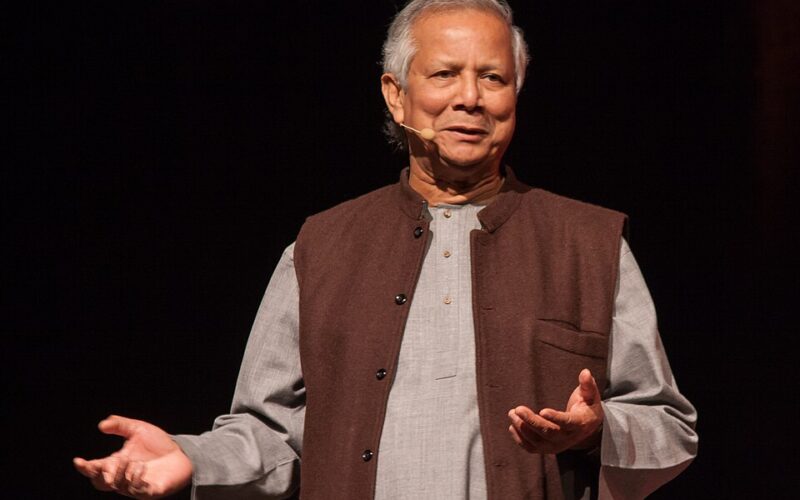
Professor Muhammad Yunus as President of Bangladesh: The Case For and Against
The political landscape of Bangladesh has undergone a dramatic transformation following the August 2024 July Uprising, which ended the 15-year rule of former Prime Minister Sheikh Hasina. In the turbulent wake of her departure, Nobel laureate Professor Muhammad Yunus stepped forward as Chief Adviser of the interim administration, tasked with stabilising state institutions and guiding the nation back toward democratic governance.
As Bangladesh navigates post-interim governance following national elections, debate has turned to whether Professor Yunus should assume the office of the President of Bangladesh. While the head of state holds a largely ceremonial position under the constitutional parliamentary system, the presidency carries immense symbolic power and moral authority during periods of transition.
Unrivalled International Credibility
As Bangladesh’s first Nobel laureate and the pioneer of microfinance through Grameen Bank, Professor Yunus possesses international stature unmatched by any domestic politician. Serving as President would afford Bangladesh a globally respected head of state capable of:
- Strengthening diplomatic relations with Western nations, multilateral lenders, and international development agencies.
- Reassuring foreign investors regarding state stability and economic integrity.
- Serving as an effective global ambassador for Bangladesh at foreign summits and climate forums.
A Non-Partisan Figure Above Political Factionalism
Bangladeshi politics has long been characterized by intense polarisation between major political blocs. Because Yunus does not belong to a traditional party dynasty, his elevated presence in the Banghababan (the presidential palace) could serve as a vital unifying force. He provides a neutral buffer capable of mediating disputes between ruling coalitions, opposition parties, and youth activist movements born out of the July Uprising.
Moral Guardrail for Constitutional Reforms
Having overseen the interim government’s reform agendas—ranging from electoral overhauls to anti-corruption measures—Yunus as President would ensure that newly enacted governance structures remain protected. In times of constitutional uncertainty, a president with broad public trust can act as a crucial check against executive overreach.
Age and Physical Demands of State Duties
Born in 1940, Professor Yunus is over 85 years old. While he demonstrated remarkable vigor while leading the interim council through complex state affairs, the continuous rigorous demands of state visits, constitutional duties, and public obligations associated with the presidency present physical challenges. Critics argue that a younger figure might be better equipped for the long-term demands of the office.
Friction with Traditional Political Parties
Despite his popularity among civil society and student groups, Yunus has historically faced resistance from traditional political establishments:
- Political Resistance: Major political parties often prefer a presidency occupied by a seasoned party loyalist to ensure seamless alignment between the executive and legislative branches.
- Interim Tenure Friction: Decisions made during his tenure as Chief Adviser—ranging from civil service reforms to economic policies—generated friction among political interest groups and public sector unions. A Yunus presidency could face persistent pushback from entrenched party figures.
Exposure of a Global Humanitarian Legacy to Domestic Politics
Throughout his career, Yunus has been celebrated as a global social entrepreneur. Transitioning permanently into a formal state office risks entangling his humanitarian legacy in the day-to-day partisan politics of Bangladesh. Any controversies surrounding the presidency or future government actions could obscure his broader international contributions to poverty alleviation.
The proposition of Professor Muhammad Yunus becoming the President of Bangladesh presents a trade-off between moral authority and political expediency.
On one hand, his global reputation, non-partisan stance, and commitment to institutional reform make him a strong candidate to unify a nation undergoing democratic renewal. On the other, his age, resistance from traditional political machinery, and the risk of subjecting his legacy to domestic political friction remain significant drawbacks.
Whether Professor Yunus assumes the presidency or steps back to serve as an elder statesman, his influence on Bangladesh’s democratic trajectory after the 2024 uprising remains a pivotal chapter in the nation’s political history.