
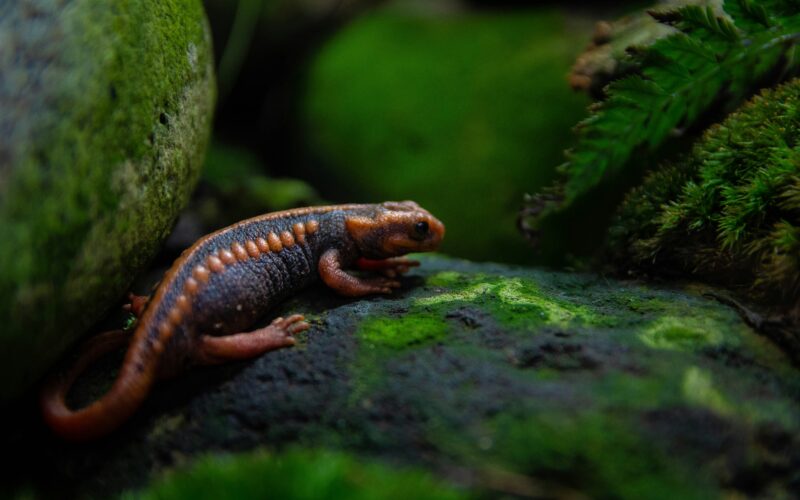
Mexican authorities and conservationists have launched a major effort to restore one of the country’s most endangered species, releasing 1,000 rare achoque salamanders into Lake Pátzcuaro in a move scientists hope will help reverse decades of environmental decline. The initiative, reported by Mexico News Daily along with supporting scientific and conservation coverage from Mongabay and Chester Zoo, represents one of the most significant reintroduction attempts for the species in recent years.
The achoque, a close relative of the more widely known axolotl, is found only in Lake Pátzcuaro in the central Mexican state of Michoacán. According to Mexico News Daily, the species has been pushed to the brink of extinction, with fewer than 100 individuals estimated to remain in the wild just a few years ago. The release of 1,000 young salamanders—aged between four and nine months—is therefore being seen as a critical step toward rebuilding the population and stabilising the ecosystem in which they live.
Officials involved in the project described the release as a turning point. The effort was led by the Michoacán Fisheries Commission, working alongside local conservation groups and breeding programmes. Speaking at the event, authorities expressed hope that the initiative would mark “the beginning of the recovery” of a species that is not only ecologically important but also culturally significant to the region.
The achoque’s decline has been driven by a combination of environmental and human pressures. Mexico News Daily reports that pollution, shrinking water levels, invasive species such as Asian carp, and even traditional harvesting have contributed to the collapse of the population. The salamanders have long been used in local medicine, particularly in remedies believed to treat respiratory conditions, adding further strain to an already fragile species.
Coverage from Mongabay highlights how conservation efforts have increasingly focused on breeding programmes to prevent total extinction. In particular, a long-running initiative involving Dominican nuns has played a crucial role in maintaining captive populations of the salamander. These programmes have preserved hundreds of individuals, providing a vital “insurance population” that can be used for reintroduction into the wild.
The newly released salamanders are part of a carefully managed process designed to maximise their chances of survival. According to Mexico News Daily, strict rules govern which individuals can be returned to the lake. Only those originally collected as eggs from the wild are eligible for release, as fully captive-bred animals may not adapt successfully to natural conditions. This approach aims to preserve the genetic and behavioural traits necessary for survival in the wild.
Scientists and conservationists emphasise that reintroduction alone will not be enough to save the species. The long-term success of the programme depends heavily on improving the condition of Lake Pátzcuaro itself. The lake has undergone significant environmental degradation over the past several decades, with pollution, sedimentation and water extraction reducing both its size and quality. These changes have severely impacted the delicate freshwater ecosystem on which the achoque depends.
Research and conservation efforts supported by Chester Zoo underline the importance of monitoring the remaining population. Scientists have been developing techniques such as microchipping individual salamanders to track their health, age and distribution. This technology allows conservationists to better understand population trends and assess whether reintroduction efforts are working. Early trials have shown that the microchips can be safely implanted without harming the animals, offering a promising tool for long-term conservation.
The reintroduction is also part of a broader strategy to restore biodiversity in the lake. Alongside the salamanders, conservation programmes have been working to reintroduce other native species, including local fish that play a key role in maintaining ecological balance. Mexico News Daily reports that tens of thousands of fish have already been released in recent years, with authorities aiming to repopulate the lake with up to one million juvenile organisms over time.
Despite these efforts, challenges remain significant. Experts warn that without sustained environmental improvements, newly released animals may struggle to survive. Pollution control, habitat restoration and community engagement will all be essential to ensuring that the lake can support a stable population in the future. The involvement of local communities, including fishermen and residents, is seen as particularly important, as their livelihoods are closely tied to the health of the lake.
The project has nevertheless been welcomed as a rare piece of positive environmental news. Conservationists say it demonstrates how coordinated action between governments, scientists and local groups can make a tangible difference, even for species on the brink of extinction. The achoque, once abundant in Lake Pátzcuaro, now stands as a symbol of both the fragility of ecosystems and the potential for recovery when sustained efforts are made.
As the released salamanders begin to adapt to their natural habitat, researchers will be closely monitoring their progress. Their survival will not only determine the future of the species but also serve as a broader test of Mexico’s ability to restore one of its most threatened freshwater environments.