
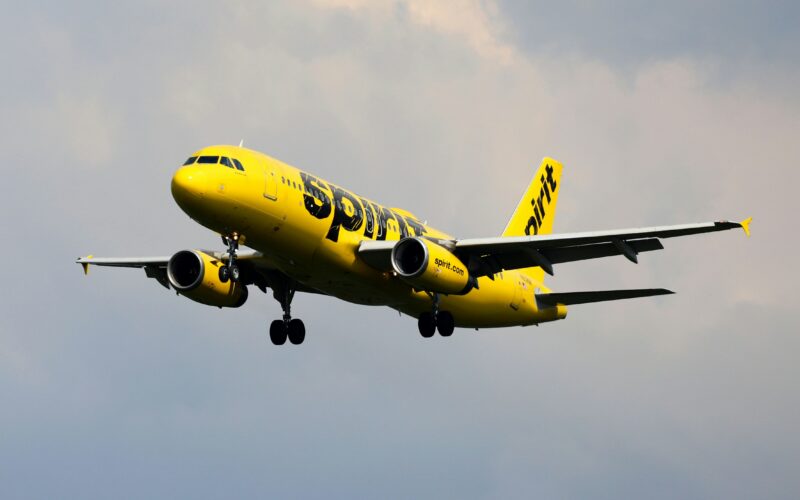
Spirit Airlines, once a dominant force in the ultra-low-cost travel market, is facing a deepening financial crisis that has raised concerns about its ability to survive. A surge in jet fuel prices, combined with ongoing restructuring challenges, has pushed the airline closer to potential liquidation, according to reporting from Reuters, The Wall Street Journal, and Axios.
The most immediate pressure comes from the sharp rise in fuel costs, which has undermined Spirit’s plan to exit bankruptcy. Reuters reports that jet fuel prices have climbed to roughly $4.24 per gallon—nearly double the level the airline had projected in its 2026 financial plans. This unexpected spike has added hundreds of millions of dollars in additional costs, potentially exceeding the airline’s available cash reserves and pushing its projected operating margins deep into negative territory.
The Wall Street Journal similarly notes that Spirit’s restructuring plan, which had been negotiated with creditors, is now at risk of collapse due to these higher costs. The airline had anticipated a smoother recovery after filing for Chapter 11 bankruptcy, but the fuel surge—linked in part to geopolitical tensions affecting global oil supply—has forced a reassessment of its financial outlook. Lenders have raised objections to the plan, arguing it fails to account for sustained high fuel prices and could trigger defaults that allow creditors to seize assets.
Axios places Spirit’s situation within a broader industry context, describing a “shake-up” across the U.S. airline sector as fuel and operating costs rise. While major carriers have more flexibility to absorb these increases—often by targeting premium travelers or adjusting pricing—budget airlines like Spirit are particularly vulnerable. Their low-cost business model leaves little room to offset sudden cost spikes, making them more exposed to market volatility.
Spirit’s financial instability is not new, but the current crisis has intensified existing weaknesses. The airline has filed for bankruptcy twice within a short period and has struggled to regain stable footing. Its latest restructuring strategy, which includes cutting nearly $1 billion in costs and reducing its fleet significantly, was designed to restore profitability. However, these efforts now appear insufficient in the face of rising expenses and continued uncertainty in fuel markets.
To cope with mounting pressure, the airline has already begun implementing emergency measures. These include raising fares, reducing routes, and shrinking its fleet to focus on more profitable operations. According to The Wall Street Journal, Spirit is also pulling out of underperforming markets and attempting to streamline its business in hopes of stabilizing finances. However, these actions may not be enough if fuel prices remain elevated for an extended period.
There are also indications that Spirit is exploring external support to stay afloat. Reuters reports that the airline has sought emergency funding from the U.S. government, reflecting the severity of its financial strain. While details of any potential assistance remain unclear, the move underscores the urgency of the situation and the limited options available to the company.
The implications of a potential collapse extend beyond Spirit itself. Axios highlights concerns that the airline’s disappearance could reduce competition in the budget travel sector, potentially leading to higher fares for consumers. Low-cost carriers have historically played a key role in keeping ticket prices down, and their decline could shift the balance of power toward larger, full-service airlines.
Despite the bleak outlook, liquidation is not yet certain. Reuters indicates that while financial pressures are severe, Spirit continues to negotiate with creditors and seek solutions to remain operational. Analysts suggest that outcomes could range from a revised restructuring plan to a sale of assets or, in the worst case, a complete shutdown.
For now, Spirit Airlines remains in a precarious position, caught between rising costs and limited financial flexibility. Its struggle illustrates the broader challenges facing the aviation industry, where external factors such as fuel prices and geopolitical instability can rapidly reshape the competitive landscape. Whether the airline can navigate this turbulence or becomes a casualty of it will likely depend on how long the current fuel crisis persists and whether it can secure the support needed to weather the storm.