
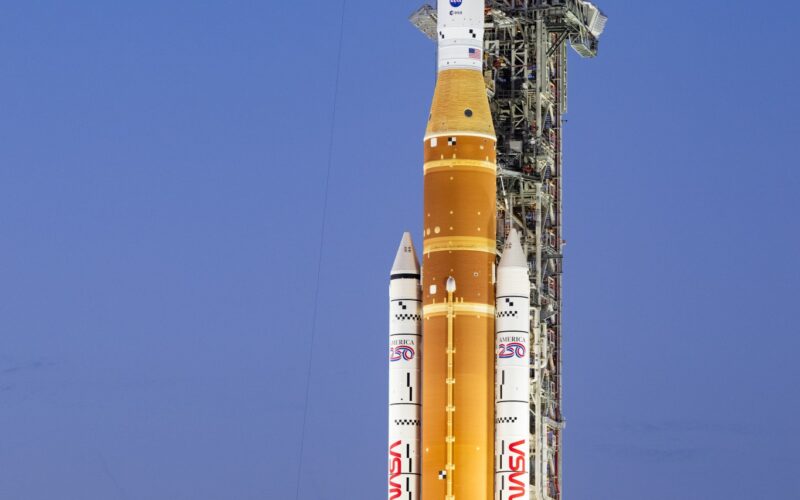
This year will mark the most important step that humanity made in its space endeavors in more than five decades. In an unprecedented engineering achievement and testament to the endurance of four brave astronauts, the Artemis II mission returned safely from its journey around the Moon. While the mission itself was designed to test the capabilities of the Space Launch System and the Orion spacecraft, its true value lies in providing conclusive proof that establishing a human colony on the Moon is within our reach.
A Journey for the History Books
Artemis II was launched into the atmosphere on April 1, 2026, from Kennedy Space Center. Commander Reid Wiseman, Pilot Victor Glover, Mission Specialist Christina Koch, and CSA Astronaut Jeremy Hansen, who piloted the Orion named ‘Integrity,’ completed their 10-day long adventure traveling farther from Earth than any human to date. At their peak distance from Earth, the four astronauts reached a staggering 252,756 miles—breaking the record previously held by the Apollo 13 crew in 1970.
+2
However, the journey was not only an assessment of the distance the astronauts could travel. It was an evaluation of the capacity of their life support systems to sustain human life for such an extended period of time in the harshness of deep space. During their lunar flyby on April 6, the four astronauts became the first people in human history to observe the lunar far-side with their own eyes. In a heartwarming ceremony that made headlines worldwide, they discovered and named two craters: “Carroll” after Commander Wiseman’s deceased wife, and “Integrity,” named after their ship.
The Faces of a New Era
The successful completion of the mission is thanks to the skills and experience of all four astronauts. Not only are Glover and Koch the first African American and female astronauts, respectively, to leave the orbit of Earth, but they are joined by Jeremy Hansen—the first foreign-born astronaut to set his sights on our planet’s satellite and Commander Wiseman who, in addition to being a veteran NASA astronaut, performed multiple maneuvers with great precision to the praise of the flight directors from Houston.
As an added bonus, on the way back, the crew witnessed one of the rarer cosmic events—an astronomical total solar eclipse lasting for 54 minutes, which had never been witnessed by human eyes before.
Splashdown & the Path Forward
The culmination of the mission occurred on April 10, 2026, when the Orion capsule, traveling faster than 25,000 mph, re-entered the atmosphere. The capsule’s heat shield had to withstand incredible temperatures of almost 5,000°F before deploying parachutes that allowed for a successful ocean landing off the coast of San Diego.
“The crew has done their part,” noted NASA Associate Administrator Amit Kshatriya shortly before recovery. “Now, we take the data they’ve gathered to ensure the next generation can stay on the Moon to stay.”
It might be easy to mistake Artemis II for later mission installments, such as Artemis 11, and dismiss it as another failed attempt to send astronauts to the Moon. However, the significance of the journey made by Reid Wiseman, Victor Glover, Christina Koch, and Jeremy Hansen should not be overlooked since without it none of the later missions would even take place. Following up from this success, Artemis III is expected to test the docking maneuver for future missions in 2027, and establish a base on the Moon.