
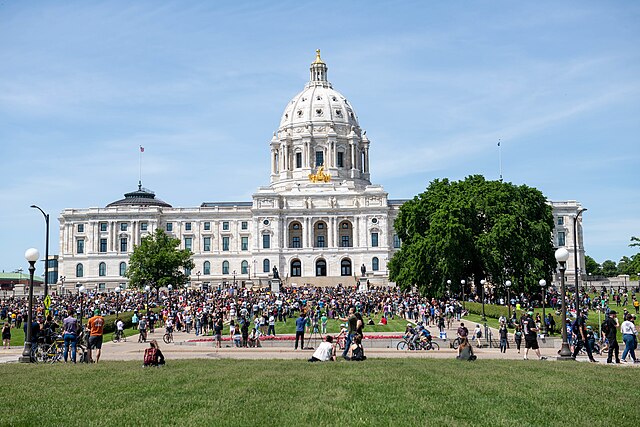
Millions of people marched in cities across the United States and around the world on March 28, 2026, in a sweeping wave of demonstrations known as the “No Kings” protests—an event widely described as one of the largest coordinated protest movements in modern U.S. history. Drawing participation from all 50 states and numerous international cities, the protests represent a significant moment of political mobilisation and public dissent against President Donald Trump’s administration, according to reporting by Reuters, The Washington Post, and The Guardian.
Reuters reports that more than 3,000 rallies were organised nationwide, with additional demonstrations taking place in global capitals including Paris, Tokyo, Berlin, and Sydney. The scale of participation—estimated in the millions—has led organisers and analysts to compare the protests to historic mass movements, suggesting they could rival or exceed previous large-scale demonstrations in the United States.
The movement’s name, “No Kings,” reflects a central message shared by protesters: opposition to what they perceive as an expansion of executive power and a shift away from democratic norms. According to The Washington Post, many demonstrators expressed concern over what they view as increasing presidential authority and weakening institutional checks and balances. Protesters carried signs and chanted slogans emphasising democracy, accountability, and the rule of law.
The protests have been fuelled by a broad coalition of concerns, illustrating the diverse motivations behind the movement. Reuters highlights key issues such as the administration’s immigration policies, including intensified enforcement measures, and the ongoing conflict with Iran, which has heightened fears of a prolonged or escalating war. Economic concerns have also played a major role, with many participants pointing to rising living costs and economic uncertainty.
The Washington Post adds that demonstrators also rallied around issues such as abortion rights, voting access, and civil liberties, with some warning of what they describe as democratic backsliding. The outlet notes that participants came from a wide range of backgrounds, including students, labour groups, civil rights organisations, and former public officials, contributing to the protests’ broad and inclusive character.
The Guardian further reports that additional grievances include cuts to healthcare programmes, reductions in scientific and academic research funding, and concerns about environmental policy changes. Many protesters framed their participation as part of a larger struggle against authoritarianism, arguing that the current political climate demands sustained civic engagement.
Major demonstrations took place in cities such as New York, Washington, D.C., Los Angeles, Chicago, and Atlanta, with particularly large gatherings reported in the Midwest, including a flagship rally in Minnesota. According to The Washington Post, some of these events drew tens or even hundreds of thousands of participants, filling streets, parks, and public squares. The scale of turnout in both urban and smaller communities underscored the nationwide reach of the movement.
Internationally, solidarity protests were held across Europe, Asia, and Australia, reflecting global interest in U.S. politics and concern about its international implications. Reuters notes that demonstrators abroad echoed many of the same themes seen in the United States, including support for democratic institutions and opposition to perceived authoritarian trends.
While the majority of protests remained peaceful, The Washington Post reports that there were isolated incidents of tension, including clashes between demonstrators and counter-protesters in some locations. Law enforcement agencies maintained a visible presence in major cities, though officials generally described the events as orderly.
Organisers emphasised that the “No Kings” protests are not intended as a one-time demonstration but as part of an ongoing movement aimed at political reform and increased accountability. The Guardian reports that many activist groups are planning follow-up actions, including voter registration drives, community organising efforts, and additional demonstrations in the coming months.
The scale and coordination of the protests highlight the role of digital platforms and grassroots organising in mobilising large numbers of people in a short period of time. According to Reuters, social media campaigns and online networks played a crucial role in spreading awareness and coordinating events across thousands of locations.
Political analysts suggest that the protests may have significant implications for the national political landscape. The Washington Post notes that such widespread public mobilisation could influence upcoming elections, shape policy debates, and signal shifting public sentiment. At the same time, the protests also underscore deep political divisions within the country, as supporters of the administration have criticised the demonstrations and organised counter-events.
Ultimately, the “No Kings” protests represent a pivotal moment of civic engagement, reflecting both widespread dissatisfaction with current policies and a broader debate about the direction of American democracy. As Reuters, The Washington Post, and The Guardian collectively indicate, the sheer scale, diversity, and international reach of the demonstrations mark them as a defining event in the current political climate—one that may have lasting consequences in the months and years ahead.