
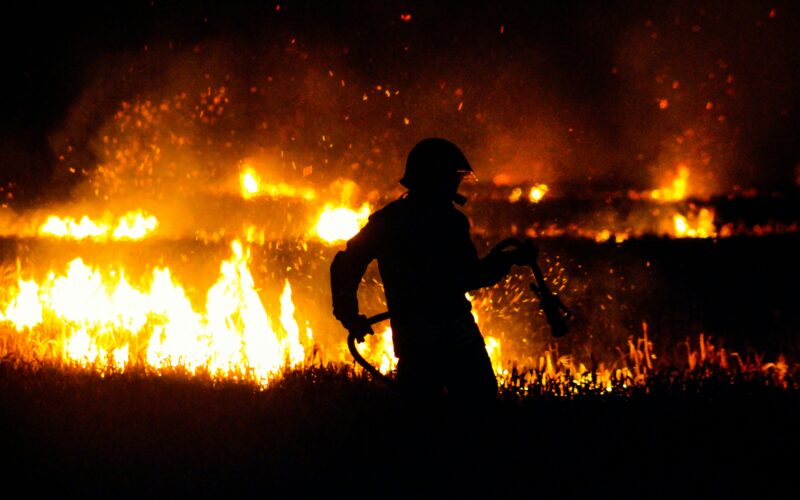
Europe is facing one of its most severe wildfire seasons in recent years, with devastating blazes sweeping across Spain, Greece and parts of France as prolonged heatwaves, drought and strong winds create dangerous conditions. Thousands of firefighters have been deployed, communities have been forced to evacuate and officials are warning that the continent’s wildfire threat is becoming an increasingly regular feature of the summer months.
According to Reuters, large areas of Spain have been hit particularly hard, with one major wildfire in the country’s northeast burning more than 12,000 hectares and forcing more than 1,000 residents to leave their homes. Firefighters have also been tackling separate blazes around Madrid and Guadalajara as authorities remain on high alert for new outbreaks while temperatures are forecast to rise again.
Reuters reported that the recent heatwaves have affected much of Europe, bringing record-breaking temperatures, worsening drought conditions and placing enormous pressure on water supplies and agriculture. The news agency noted that dry vegetation, combined with powerful winds and prolonged periods without rainfall, has created ideal conditions for rapidly spreading wildfires.
The Associated Press reported that France has also been battling significant fires, including a major blaze in the historic Fontainebleau forest south of Paris. Hundreds of firefighters, supported by aircraft dropping water from the air, were deployed to contain the fast-moving flames. The fire forced evacuations, disrupted rail services and led to road closures as emergency crews worked to protect nearby communities.
According to the Associated Press, investigators are examining whether arson may have contributed to the Fontainebleau fire, although officials have cautioned that the investigation remains ongoing. Strong winds have complicated firefighting efforts, allowing flames to spread quickly through dry woodland.
The Associated Press also reported that southern Spain suffered one of the country’s deadliest wildfires in decades after a fast-moving blaze claimed 13 lives in the Los Gallardos area. Authorities said the fire spread rapidly through forest and farmland during a period of exceptional heat, drought and gusting winds. Victims included citizens from several European countries, highlighting the tragedy’s international impact.
While Spain and France have experienced some of the most destructive fires, Greece has also remained under constant threat. According to Reuters, Greek authorities have increased surveillance, raised wildfire alert levels and prepared emergency services as forecasts continue to warn of extremely high fire danger across several regions.
Experts say the increasingly severe wildfire seasons are closely linked to climate change. According to The Guardian, firefighters across Europe are now facing longer fire seasons, more simultaneous outbreaks and fires that are behaving in ways previously considered unusual. Emergency commanders have compared their work to making life-or-death decisions in an overcrowded emergency room, where limited resources must be directed towards the fires posing the greatest immediate threat.
The Guardian reported that abandoned farmland, hotter temperatures and drier vegetation have combined to create landscapes that ignite more easily and allow fires to spread more rapidly than in previous decades. The newspaper also noted that many fires are now threatening suburban and urban communities rather than remaining confined to remote forests.
The growing frequency of these extreme events is placing enormous pressure on emergency services. According to The Guardian, some European countries are adapting by introducing improved firefighting equipment, creating natural firebreaks and exploring more preventative approaches to managing forests and vegetation. However, experts argue that much of Europe’s response still focuses on reacting to fires after they begin rather than reducing long-term wildfire risks.
Reuters reported that the impacts of the prolonged heat extend well beyond wildfires. Severe drought has reduced river levels across parts of France, affecting agriculture and even limiting electricity production at some power stations that rely on river water for cooling. Germany has also experienced disruption to shipping along the Rhine because of unusually low water levels.
Health experts are also raising concerns about the wider effects of extreme heat. According to Reuters, the World Health Organization has urged governments to treat heatwaves as major public health emergencies rather than isolated weather events, noting that thousands of excess deaths have already been linked to this summer’s high temperatures across Europe.
Scientists continue to warn that Europe is warming faster than any other continent. According to the Associated Press, data from the European Union’s Copernicus Climate Change Service shows that Europe has warmed at roughly twice the global average rate since the 1980s, increasing the likelihood of longer and more destructive wildfire seasons.
As firefighters continue battling blazes across multiple countries, officials are urging residents to remain vigilant and follow evacuation orders where necessary. Emergency services also continue to stress the importance of preventing accidental fires during periods of extreme heat, when even a small spark can quickly develop into a major wildfire.
With climate experts warning that hotter summers and prolonged droughts are likely to become more common, governments across Europe face increasing pressure to strengthen both wildfire prevention and emergency response strategies. As reported by Reuters, the Associated Press and The Guardian, this year’s wildfire season serves as another stark reminder of the growing challenges posed by a warming climate and the need for long-term action alongside immediate disaster response.