
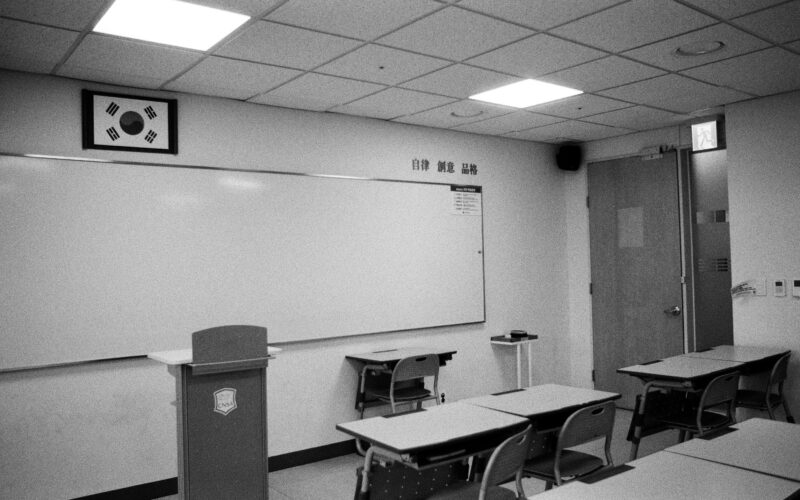
In the early part of 2026, the world’s educational circles are abuzz with the dramatic turn of events in East Asia, where the high-stakes revolution in educational technology has hit an unexpected roadblock. The recent decision of the South Korean National Assembly to officially downgrade the “AI Digital Textbook Promotion Plan” to “supplementary” status has sent shockwaves across the world, as the country that once led the pack in the race to technological innovation in the classroom is suddenly faced with the harsh reality of the human cost of innovation. The plan, originally intended to be mandatory in nature and to be fully implemented by 2025, had promised to revolutionise the way in which mathematics, English, and coding are taught in the country, through the use of “AI-powered hyper-personalisation.” The plan, touted to bridge the gap between achievement levels and to ease the burden on teachers, had been put through a tumultuous trial period, where it faced resistance both from the educational publishing industry and the teaching staff themselves.
While the promise of the plan had been tantalising, in that it promised to utilise the capabilities of generative algorithms in the creation of content that could be tailored to the needs of each student, in real time, and according to their level of understanding, the harsh realities that emerged in the classrooms of Seoul and Busan had been far less encouraging, as the technical difficulties and poor content quality, coupled with an increased rate of teacher burnout, had led to the recent decision of the National Assembly. While the decision to utilise technology in the classroom had been intended to revolutionise the way in which the social structures of the classroom function, it is evident that, in spite of the ability of technology to process information at incredible speeds, the social structures themselves are not always so accommodating.
This regional tension is part of a larger global debate happening in March of 2026. As the South Koreans are dialling back, the European Commission has just announced a complete set of new ethical guidelines for AI in schools, focusing on “digital well-being” and the maintenance of human agency. Other global bodies such as UNESCO and the OECD are entering the debate, arguing that “metacognitive laziness,” or the tendency of the student to let the AI do the work instead of learning the skills themselves, is becoming an increasing concern. The consensus of the global leaders in education policy is that the technology should remain in the hands of the teacher, not replace them. This is reflected in the “human-centred” approach in the UK and parts of North America, where the AI is relegated to behind-the-scenes logistics rather than direct, unmediated instruction of the student.
The after-effects of the “disastrous” trial in South Korea, as the local media has termed it, serve as a reminder of the need for the teacher-centric approach. When the technology is imposed from the top down without adequate training or validation of the quality of the content, the technology tends to cause more problems than it solves. The silver lining of the 2026 controversy is the new emphasis on “AI Literacy.” Rather than throwing more and more money into the latest and greatest in AI software, schools are now focusing on teaching the students and the teachers how to think critically about the output of the AI. Rather than trusting the machine as always right, the new educational paradigm is one in which the student of the future is able to think critically about the automated world in an ethical way.
As we progress through the middle of the decade, the lesson to be learned from these recent events is quite clear: the future of education is not a binary choice between the old-school textbooks and the all-knowing algorithms. No, the future of education is a balancing act. Success in the modern classroom, it would appear, lies in the ability to use technology to automate the “shadow work” of the educational system, but to maintain the uniquely human elements of mentorship, empathy, and critical debate. The digital seesaw will, of course, continue to tilt, but the current momentum would indicate that the most successful systems will be the ones that place the teacher’s intuition over the algorithm’s prediction.