
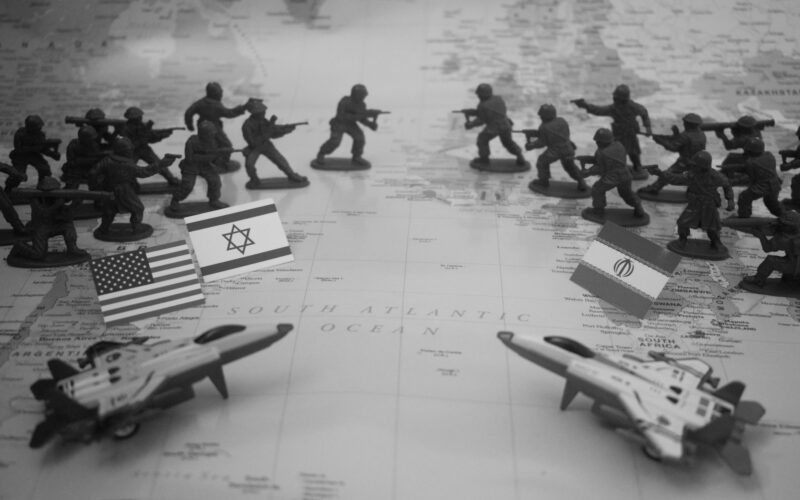
The global arena has been brought to a state of high alert this week as a series of unprecedented military escalations in the Middle East have sent shockwaves through the international diplomatic and financial arenas. As a result of months of heightened tensions and the failure of high-level nuclear negotiations that occurred in the middle of February, a joint military operation that occurred on February 28 has effectively brought a state of friction that existed in the Middle East to a full-scale international crisis. The level of the intervention that occurred as a result of the joint operation, which targeted critical infrastructure as well as the leadership centres of the region, has resulted in an instantaneous reaction from the actors in the region that has left the United Nations and the international community in a state of disarray as to how to prevent a complete collapse of stability in the region. The catalyst that has brought about the current state of volatility in the Middle East can be attributed to the failure of the February 2026 diplomatic negotiations that resulted in a state of deep-seated divisions between the nations. This led to the initiation of “Operation Epic Fury” by the United States and Israeli forces that resulted in a state of instantaneous fallout as a result of the Iranian retaliatory strikes that have not only targeted the United States and Israel but also the Arab nations of Bahrain, Kuwait, as well as the UAE.
Economically, the world is already feeling the pinch of what is being dubbed the “Hormuz Factor.” In the days that immediately followed the first attacks, there were reports of the possibility of the Strait of Hormuz being closed to commercial ships. This is because it is one of the major arteries of the world, through which 20% of the world’s petroleum is channeled. Although the Strait of Hormuz is still technically open, with the military skirmishes being held at sea, the threat of the Strait being closed has already caused the price of oil to rise to the highest it has been in over a year, with logistics companies and energy giants already working to reroute the ships. On the other hand, today, March 8, is International Women’s Day, which has been marked by a sense of urgency. Although the UN officially launched the 2026 theme for the day, which is “Rights. Justice. Action. For ALL Women and Girls,” the tone for the day has been largely influenced by the humanitarian crisis that is presently being witnessed. This is because there has been an acknowledgment of the fact that it is women and children who are presently feeling the brunt of the crisis, with over 473 million children presently living in or being forced out of conflict zones globally.
As the situation is still evolving, the international community is at a crossroads. Although the Western powers argue that the strikes were necessary to prevent the proliferation of nuclear technology, the United Nations Secretary-General has issued a stern warning that there is “no viable alternative to the peaceful settlement of disputes.” As the Strait of Hormuz is still at risk and the death of high-ranking officials complicates the ceasefire, the coming weeks will be a test of international diplomacy. Whether the international community can de-escalate the situation or will be drawn into a wider, more protracted conflict is the defining question of 2026.