

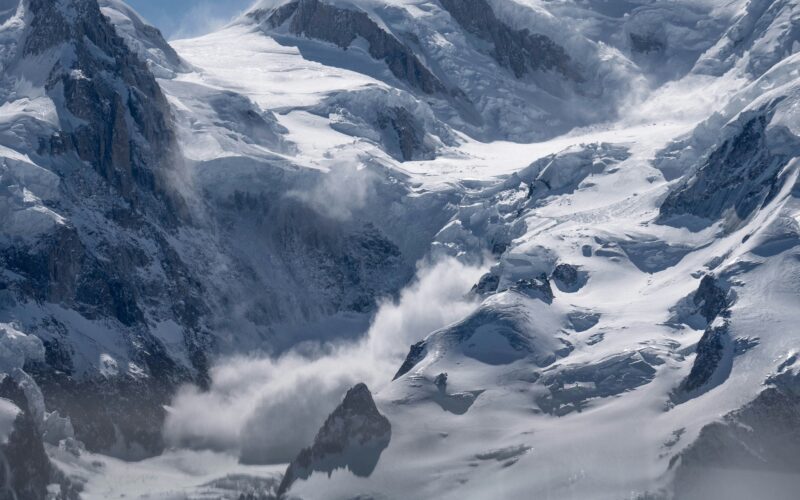
The 2025-2026 winter season has been marked by a series of tragic headlines as the world witnessed a deadly winter season, with over 90 fatalities due to avalanches in the Northern Hemisphere.
A tragic incident occurred in California, which resulted in the death of eight skiers, while the European Alps have witnessed “century-level” danger warnings, which have put the current state of winter sports under the scanner. Although the fatalities have been mounting on both sides of the Atlantic, the mechanical aspects of the avalanches have been very different.
California was hit by a fresh wave of storms after a prolonged “snow drought.” The difference in the snowpack was the lack of a “bond” as the new, fresh, and wet snow fell on the old, frozen surface or bare ground, which acted as a “sliding board.”
On the other hand, the European Alps have witnessed a “double whammy” of back-to-back storms and strong winds, which resulted in massive, unstable snowpacks. Experts have stated that the conditions in the Alps, such as the region of Val d’Isère, have been as bad as the conditions experienced in 1999.
Is the changing climate the culprit behind the deadly avalanches? Although climatologists have been cautious in directly attributing the cause to global warming, there have been a number of indicators that have shown a destabilising effect. Dr. Ben S. Pickering of the University of Manchester has stated that climate change has resulted in “volatility,” characterised by long dry spells, which have been followed by violent bursts of snowfall.
Weak Layers: Protracted dry periods, such as those we have seen at the start of this season, create “persistent weak layers” in the snow that will collapse easily if new weight is added.
The “Wet” Threat: As temperatures increase, wet avalanches are more common and are more difficult to forecast than dry powder avalanches.
Safety experts have indicated that the environment accounts for only half of the risk factors involved in avalanches. Blaise Agresti, a mountain guide from Chamonix, France, indicates that 25% of skiers are venturing into unmanaged areas of the mountains, known as “off-piste.”
Safety Measures: transceivers and probes are crucial in locating victims of avalanches as quickly as possible; avalanche airbags help keep victims closer to the surface of the snow; professional guides have local knowledge of “hidden undercurrents” in the snow; thermal imaging drones are now being used by resorts to help locate victims of avalanches and make recovery processes faster. Thomas Hager, a ski guide from Austria, says, “In an ocean, you do not know where the undercurrents are. But locals know where the undercurrents are in their ocean. Always talk to locals.”
While 95 deaths have been recorded this season, it is still not the worst season in history. In fact, last season there were 150 deaths from avalanches. It appears that modern technology and “blasting” have actually prevented more deaths from avalanches than have occurred. In fact, experts have indicated that it is “remarkable” how much snow we have received and how well it has been handled by new warning systems.
As the weather starts to clear, the threat shifts. The sun-facing slopes will soon be melting and getting weaker, and the threat to backcountry enthusiasts will still be there despite the blue skies.