

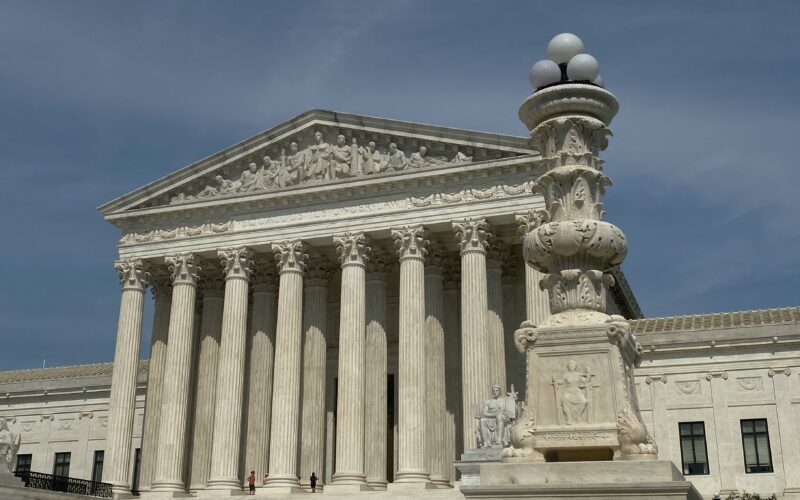
In a landmark case that has sent shockwaves throughout the world and the halls of Congress, the United States Supreme Court has struck the final nail into the coffin of the executive branch’s emergency economic power grab. On February 20, 2026, the Supreme Court ruled 6-3 in the landmark case of Trump v. V.O.S. Selections, holding the President cannot impose across-the-board tariffs on the international community using the International Emergency Economic Powers Act (IEEPA). This case represents one of the greatest shifts in the United States’ trade law and reasserts the Constitution’s original intent: the power to tax and regulate commerce with foreign nations belongs to Congress, not the President.
For over a year, the world has witnessed a new era of global trade policy, dubbed the “reciprocal” tariff policy, whereby the United States has placed tariffs on the imported goods of some of its largest partners, including Canada, Mexico, and China. The President has cited the emergency situation on the U.S.-Mexico border and the flow of narcotics into the United States to invoke the IEEPA and impose the tariffs on the aforementioned countries. However, the majority opinion issued by the Supreme Court held the President has the power to freeze assets and impose other economic sanctions during an emergency, but imposing across-the-board tariffs on the world community represented a bridge too far and established the limit to the executive branch invoking the IEEPA to usurp the legislative role.
The legal and economic consequences of this ruling are staggering to say the least. Just days after the ruling was handed down, the Court of International Trade (CIT) issued a “Refund Order,” which went nationwide and required that US Customs and Border Protection cease and desist with regards to these specific tariffs and begin the process of refunding billions of dollars to importers. It has been estimated that the federal government could face a bill of up to $175 billion to refund these tariffs that were paid over the course of the last year alone. This has placed the Department of Justice in a frantic defensive position as they seek to appeal the ruling based on the “universal” nature of the refund and that the CIT overstepped their authority by making their ruling apply to all importers and not just the parties to the lawsuit.
While the stinging effect of the judicial ruling was clearly felt by the Trump administration, the “tariff war” is far from over; it has simply changed its legal skin. Just as the Supreme Court was announcing their ruling, the administration was already working to implement another legal mechanism to impose their tariffs: Section 122 of the Trade Act of 1974. This section of the law allows a President to impose tariffs of up to 15% for a period of 150 days to deal with balance of payments problems that plague the US economy. This has given the executive branch a chance to keep their protectionist policies on life support, though eventually congressional approval will be required to extend these tariffs beyond the initial five-month period.
As we progress further into 2026, this legal tug-of-war represents a larger trend of what has been dubbed “constitutional rebalancing.” For many years, the executive branch has gradually increased its power with the incremental delegation of authority by the legislative branch through special acts of Congress. However, the Supreme Court has now indicated that it is willing to begin to curb that delegation of power. From the perspective of businesses and international trading partners, the ruling may offer a degree of predictability, but the underlying tension persists nonetheless. The world waits with bated breath to see if Congress will finally step up to the plate to fill the legislative void or if the administration will continue to seek the next “emergency” loophole in the law.