

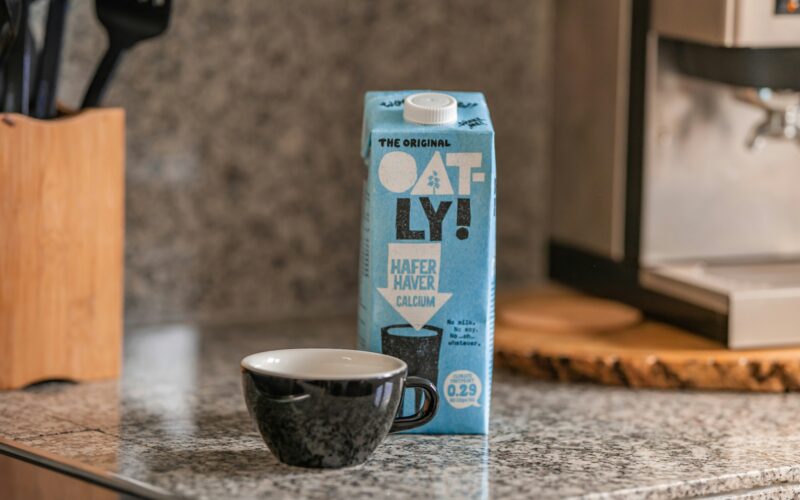
As more consumers consider how their food choices impact the environment, the debate over oat milk versus cow’s milk has become increasingly popular. Recent analyses show that generally, plant-based alternatives are lighter on the planet, although the full picture is more nuanced.
Lower Emissions and Water Use
Studies have shown that plant-based milks such as oat milk generate significantly fewer greenhouse gas emissions than dairy milk. On average, one cup of cow’s milk produces around 330 g of CO₂ equivalents, in comparison to approximately 102 g for oat milk, according to The Guardian. This disparity is mainly due to the methane emissions produced by cows, a potent contributor to climate change.
There is also far less water required to produce oat milk as opposed to dairy production. Since oats are primarily grown using rainfall instead of intensive irrigation, their environmental footprint is much smaller than cow’s milk, which demands water for both cows and their feed crops, as reported by The Guardian.
A comprehensive report by ProVeg supports this, highlighting that plant-based milks require significantly less land and emit fewer greenhouse gases across their life cycles when compared against cow’s milk.
Tradeoffs in Production and Packaging
Although oat milk is generally more sustainable, processing and packaging can add to its overall footprint. In some cases, the environmental cost of bottling, transportation, and production infrastructure causes the total impact to become higher than initially expected. However, even whilst taking these factors into account, oat milk still produces fewer emissions per litre than cow’s milk, as stated by Archyde.
Broader Environmental Impacts
Dairy farming is a significant contributor to methane and nitrous oxide emissions, using large amounts of water, as well as requiring extensive land for feed crops. On the contrary, oat milk is less resource-intensive and typically relies on fewer fertilisers, reducing nutrient runoff and soil depletion, as reported by The Guardian and ProVeg.
These environmental considerations have resulted in oat milk becoming a popular choice for climate-conscious consumers, especially in areas subject to water scarcity or agricultural pressure.
No One-Size-Fits-All Solution
Experts caution that there’s no universal “best” milk, since environmental impacts vary by region, production practices, as well as consumer priorities. The Guardian notes that balancing greenhouse gas emissions, water use, and land consumption may necessitate a mix of dairy and plant-based options depending on individual and local considerations.
For consumers who are seeking to reduce their environmental footprint, oat milk provides a clear advantage in emissions and water use, while cow’s milk remains resource-intensive. Having a concrete understanding of the full lifecycle impacts, including production, packaging, and transport, helps shoppers make informed choices which align with sustainability goals.