

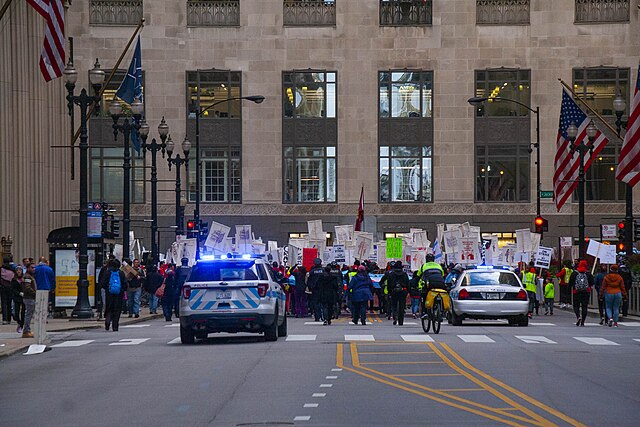
Tens of thousands of teachers and education staff across the Australian state of Victoria have taken part in a large-scale strike action in late March 2026, forcing hundreds of public schools to close or significantly reduce operations. The industrial action, which has been described as one of the most significant education strikes in the state in recent years, highlights deepening tensions between educators and the government over pay, workload, and classroom conditions. The events have been widely reported by The Guardian, ABC News Australia, and News.com.au, each of which points to growing dissatisfaction within the teaching profession.
According to reports from The Guardian and ABC News Australia, between 30,000 and 35,000 teachers, principals, and support staff walked off the job as part of the coordinated action organised by the Australian Education Union (AEU). Many of those involved travelled to Melbourne’s central business district, where they gathered for a mass rally and march. Protesters moved through the city from Trades Hall to the state parliament, carrying signs and chanting slogans calling for better pay, improved conditions, and increased respect for the profession.
The scale of the strike led to widespread disruption across Victoria’s public education system. As reported by ABC News Australia and News.com.au, around 500 schools were either fully closed or operating with minimal staffing levels, leaving many students without regular classes for the day. Some schools remained open but were unable to deliver normal lessons, instead providing basic supervision for students whose parents could not make alternative arrangements. This created challenges for families, many of whom had to organise last-minute childcare or take time off work.
At the centre of the dispute is a disagreement over pay and conditions between the Victorian government and the AEU. Union representatives are calling for a pay increase of approximately 30–35% over several years, arguing that current salaries do not reflect the demands of the job. In contrast, the government has proposed a lower increase, reported by ABC News Australia to be around 17–18.5%, which has been rejected by union members after months of negotiations. The gap between these positions has become a key sticking point in the ongoing dispute.
Beyond pay, teachers are also raising concerns about workload and classroom conditions. As highlighted by The Guardian, many educators say they are facing increasing administrative responsibilities, larger class sizes, and a lack of sufficient support staff. These pressures, they argue, are contributing to burnout and making it more difficult to provide high-quality education to students. Some teachers have warned that without meaningful changes, the profession will struggle to attract and retain new staff, worsening existing shortages.
Union leaders have emphasised that the strike is not only about wages but also about the long-term future of education. They argue that improving working conditions for teachers will ultimately benefit students by creating a more stable and effective learning environment. According to News.com.au, many participants in the protests expressed frustration at what they see as years of underinvestment and policy decisions that have placed additional strain on schools.
The demonstration in Melbourne was one of the largest teacher rallies seen in the state, with thousands of participants filling the streets in a highly visible show of unity. The Guardian described the scene as a “sea of red,” referencing the colour associated with the union, as educators from across Victoria gathered to make their voices heard. The size of the crowd underscored the level of support for the strike among education workers.
Despite the scale of the protests, the events remained largely peaceful. Authorities reported minimal incidents, and the rally proceeded without major disruption beyond the planned demonstrations. However, the impact on daily life was significant, particularly for families and students affected by school closures. As noted by ABC News Australia, the strike also prompted renewed debate about the balance between industrial action and its consequences for students’ education.
The Victorian government has acknowledged the concerns raised by teachers but has urged the union to return to negotiations. Officials have stressed the importance of reaching an agreement that is both fair to workers and financially sustainable. However, union representatives have indicated that further industrial action could take place if a satisfactory deal is not reached, raising the possibility of continued disruption in the coming weeks.
The situation in Victoria reflects broader challenges facing education systems not only in Australia but around the world. Issues such as teacher shortages, workload pressures, and funding constraints have become increasingly prominent in recent years. As reported across The Guardian, ABC News Australia, and News.com.au, the outcome of this dispute could have wider implications, potentially influencing education policy and labour negotiations in other regions.
Ultimately, the strike represents a critical moment for the Victorian education system. It highlights the growing gap between the expectations placed on teachers and the resources available to them, as well as the increasing willingness of educators to take collective action in response. Whether the dispute can be resolved through negotiation or escalates further remains uncertain, but it is clear that the issues at its core are unlikely to disappear in the near future.