

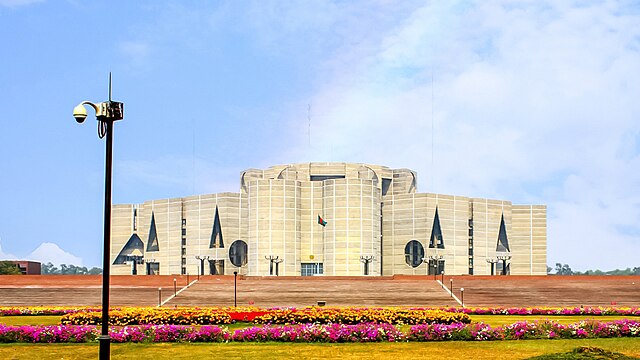
DHAKA — Bangladesh’s 13th National Parliament convened for its historic first session on Thursday, 12 March 2026, a day laden with symbolism, raw emotion, and political theatre. Twenty months after the July Uprising that toppled the previous autocratic regime, the new parliament met for the first time, with lawmakers celebrating the birth of a new democratic era even as the opposition staged a dramatic walkout.
The atmosphere was electric as MPs gathered in a chamber that, for the first time in decades, truly represented a transfer of power born from a mass movement.
“We Freed This Parliament with Students and the Public”
In a stirring address, Nahid Islam, the chief of the National Citizens Party (NCP) and chief whip of the opposition, described the day as “historic,” reminding the house that its very existence was a tribute to the sacrifices of the recent past.
“My fellow fighters and I liberated this parliament, accompanied by the students and the public of this country,” Nahid declared.
He paid profound tribute to the martyrs of the July Uprising, which led to the fall of the Awami League government in August 2024. Nahid connected the 2024 movement to a longer history of struggle, commemorating victims of past tragedies including the Pilkhana massacre, the road safety movement, and the anti-Modi protests. He also paid homage to specific individuals who have become symbols of past injustices: Sharif Osman Hadi, the slain spokesperson of Inqilab Moncho; BUET student Abrar Fahad; and Felani Khatun, a victim of a BSF shooting.
A Walkout and Red Cards: Opposition Protests President’s Speech
The historic day was not without its disruptions. As President Md Shahabuddin entered the chamber to deliver his traditional address, opposition MPs rose from their seats in protest, displaying red cards bearing the words “No betrayal of July.”
While the ruling party and the leader of the house stood to greet the president, some opposition lawmakers remained seated. Despite the speaker’s calls for calm, members of the Jamaat-e-Islami continued their disruption, ultimately walking out of the session entirely as the president began his speech.
A Parliament for the People: PM Tarique Rahman’s Vision
Following the election of the speaker, Prime Minister Tarique Rahman delivered his welcome address, framing the new legislature as a vessel for public aspiration.
“Today’s parliament is the parliament of Bangladesh’s people,” the Prime Minister stated. “The people of the country are looking to this parliament with expectations. In the interests of the people, I want to make this parliament a meaningful one.”
Declaring that Bangladesh had resumed its “long-awaited journey for parliamentary democracy,” Tarique sought the cooperation of all parties to build a prosperous, safe, and democratic nation.
Speaker Steps Down from Party Post, Urges ‘Bangladesh First’
Earlier in the day, veteran BNP leader and newly elected Speaker Hafiz Uddin Ahmad formally resigned from his post in the party’s National Standing Committee to maintain the neutrality required of his new office.
In his first speech from the chair, the freedom fighter urged all members to put the nation above party politics. “Bangladesh first; let this be our motto,” he said. Recalling the nation’s history, he noted that “dictators have risen” at various times, but “the people of Bangladesh have fought. The fascists have been removed through the July Uprising.”
He paid tribute to martyrs of that uprising, including Abu Sayed, Mir Mugdho, and Wasim.
Condolences for War Crimes Convicts
In a highly significant and symbolic move, the first session saw the passage of a condolence motion that included the names of seven convicted war criminals from the 1971 Liberation War.
Following a proposal, Speaker Hafiz Uddin Ahmad announced the inclusion of six former Jamaat-e-Islami leaders—including Motiur Rahman Nizami, Ali Ahsan Mohammad Mujahid, Abdul Quader Mollah, Muhammad Kamaruzzaman, Mir Quasem Ali, and Delwar Hossain Sayedi—as well as former BNP MP Salahuddin Quader Chowdhury. All seven were convicted by the International Crimes Tribunal under the previous Awami League government for crimes against humanity, including genocide, murder, and rape, committed during the 1971 war.
Remembering Khaleda Zia
The shadow of the past loomed large as Home Minister Salahuddin Ahmed, the MP for Cox’s Bazar-1, addressed the house. Speaking on the condolence motion, he remarked that former prime minister Khaleda Zia, the BNP chairperson who passed away in 2025, would have been the happiest person to see the new parliament.
“The mother of democracy is not among us today,” Salahuddin said. “However, she is among the people. She will live on as an inspiration for democracy.”
Dignitaries and a Rickshaw Puller in the Gallery
The historic session drew a packed house of distinguished guests. In the VVIP gallery were Chief Advisor to the interim government Muhammad Yunus, former law advisor Asif Nazrul, and the Chief Election Commissioner.
Prime Minister Tarique Rahman’s family, including his wife Zubaida Rahman and daughter Zaima Rahman, were also present, alongside diplomats from the US, UK, China, India, and Pakistan.
In a poignant moment that underscored the connection between the parliament and the movement that created it, Nur Muhammad, the rickshaw puller who carried martyred student Golam Nafiz to the hospital during the July Uprising, was also seen sitting in the gallery as an invited guest.
The first session marked the official commencement of the 13th parliament, with the election of Hafiz Uddin Ahmad as Speaker and Barrister Kayser Kamal as Deputy Speaker, setting the stage for a new chapter in Bangladesh’s parliamentary history.