
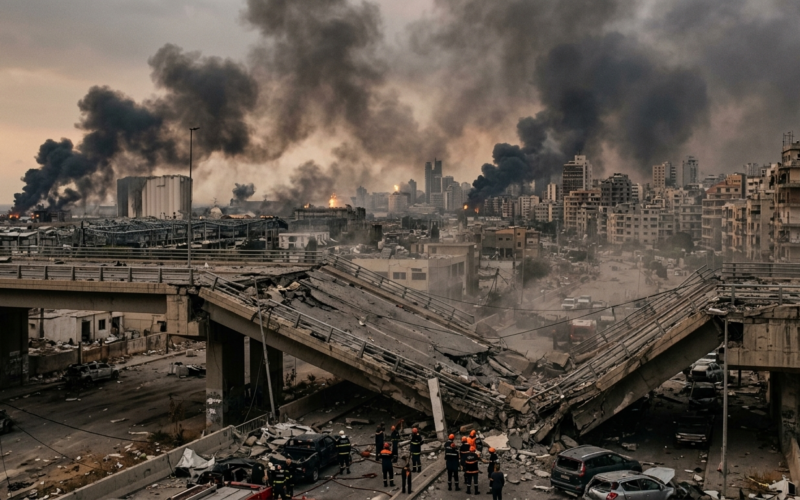
By April 4, 2026, the situation in the Middle East region had become extremely unstable. Over the course of a week, a series of dramatic shifts in the nature of the hostilities have occurred, leading from targeted attacks to infrastructure destruction and signaling the onset of a prolonged attrition battle that could undermine the entire region.
In the last week, a turning point occurred with respect to the strategic objectives of the hostilities, when military targets gave way to the vital infrastructure of sovereign nations.
The Urban Battlespace: After increased missile strikes launched by Hezbollah earlier this week, Israel’s military forces have begun targeting infrastructure in Beirut. This escalation marks the end of the “red line” established by both parties regarding urban infrastructure and puts millions of innocent civilians at risk of exposure to high-kinetic military operations.
Infrastructure Targeting: On April 3, the current position of the United States in this conflict became clear after President Donald Trump declared that systematic infrastructure attacks would be conducted over the course of several weeks. Such attacks will target oil reserves, data centers, bridges, and other essential pieces of infrastructure vital to both military logistics and civilian life.
Economic Warfare: Recent moves made by Iran’s parliament to impose tolls on passage through the Strait of Hormuz have been viewed by analysts as a form of economic retaliation against the United States. Using its strategic geographic advantage, Tehran seeks to provoke economic involvement on a global scale.
The human and economic costs of this week’s escalations are beginning to manifest in quantifiable, devastating ways. “The systematic targeting of non-military infrastructure is creating a vacuum of essential services that will take decades to rebuild.” — Regional Security Analyst
- Casualties: Over 550 confirmed dead in Iran; rising numbers in Lebanon and northern Israel.
- Energy Security: Crude oil futures remain volatile as the Strait of Hormuz threat looms.
- Civilian Logistics: Fuel surcharges implemented in Southeast Asia; Kuwait airport fuel storage compromised.
- Diplomacy: The Islamabad Summit (Pakistan, Saudi Arabia, Turkey, Egypt) remains deadlocked.
Events of the past week seem to have shifted the strategic focus of all sides from seeking out a “negotiated peace” to adopting a “maximum degradation” policy. With projections for at least a month of intense combat operations ahead, the international community is now facing the harsh reality that nothing less than a total destruction of the regional order will be required.
Despite continuing discussions in Islamabad, this window of diplomatic opportunity is now coming to a close.